April 29
How to pronounce English well?
Don't worry if you don't have a native-English accent. It's important to be able to speak clearly, so that people can understand you. However, it's almost impossible to sound exactly like a native English speaker if you are learning English as an adult in a non-English speaking country.
International Phonetic Alphabet
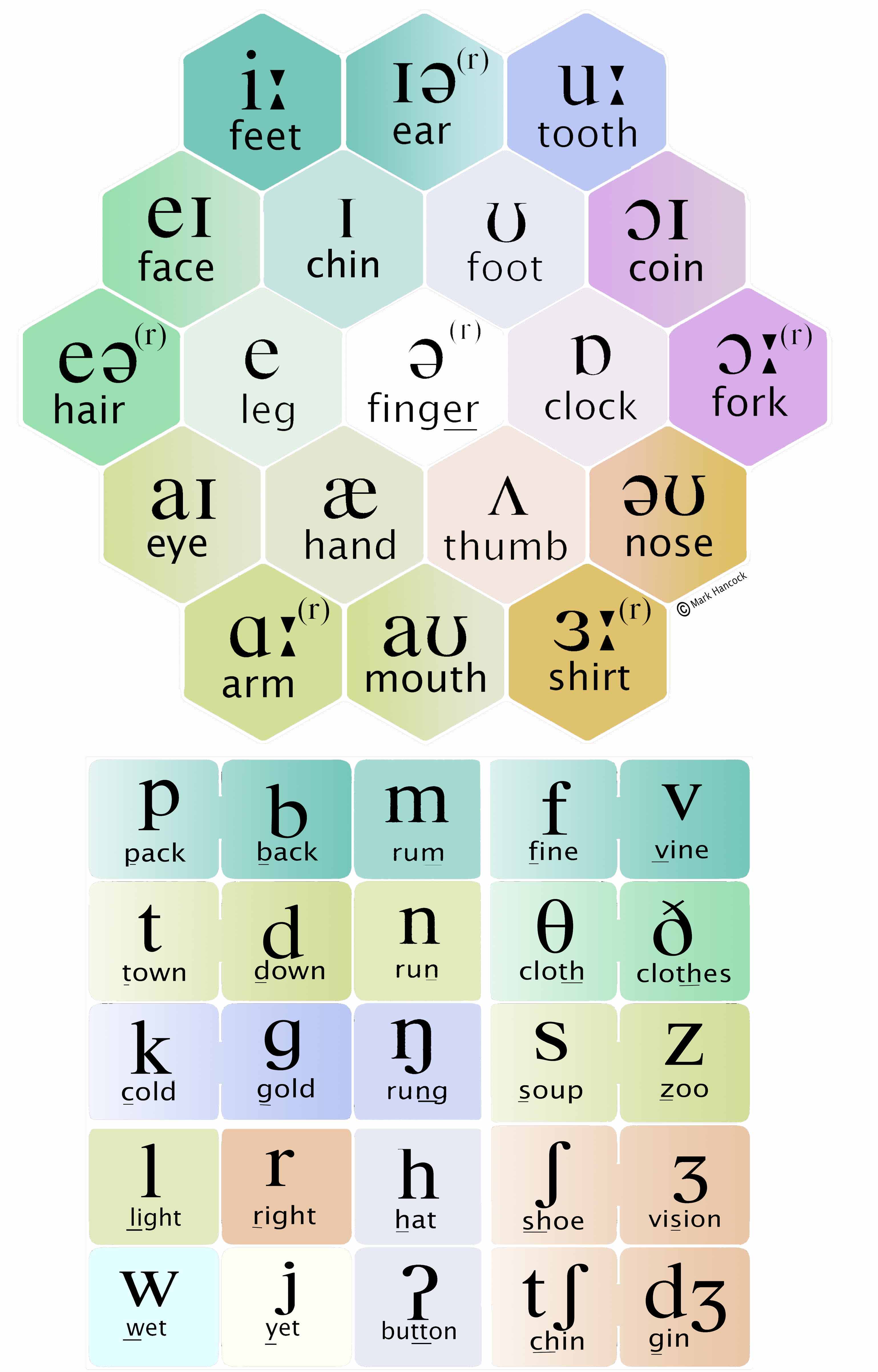
Pronunciation 1
1. Let's watch a video: The Italian Man Who Went to Malta
March 9
Regular verbs pronunciation in past
In this video you can find how to pronounce regular verbs in past, take notes in your notebook and write what you learned in comments
For more explanation:
https://www.englishclub.com/pronunciation/-ed.htm
Activities to do:
1. First of all go to: http://www.englishexercises.org/makeagame/viewgame.asp?id=7148
2. Watch the video
3. Do the exercises
Write down in comments what you learned in this lesson!

my name is andres mejia and this is what i learned in this class.
ResponderEliminarabout the video and the activity i learn that some verbs have a different pronounciation in past that we used to think.
every verb that past ends in a vowel sound or voiced consonant sound (B, G,L, M, N, V, Y, and Z), the –ED ending is pronunced (D) and when the regular ver ends in an unvoiced consonant sound ( K, F, P, SH, CH or X) the –ED ending is pronounced (T)
Mauro Davila, I leearned the correct pronuntation of some regular verbs when ends in an unvoiced consonant sound or in a vowel sound.
ResponderEliminarMy name is Adriana Ordoñez
ResponderEliminarI learn in this class the pronuciation of regular verbs in the past. For example
Bowed /d/ (because the regular ver ends in a vowel sound or voiced consonant sound (B,G,L,M,N,V,Y, and Z)).
watched /t/ (because the regular ver ends in an unvoiced consonant sound (K,F,P,SH,CH or X)). and flooded (the verb ends in the consonant sounds T and D.).
The exceptions (words use as adjetives are pronounced with /id/), for example learned /id/.
I'm Juan Diego López and with the video I learned:
ResponderEliminar-When a regular verb ends in a "ch", an "sh", a "k", an "s", a "p" or an "f" sound, the "ed" takes on a "t" sound.
-If the verbs that end in a "t" sound are followed by another word that starts with a vowel, the "t" becomes a "d" sound
PEDRO PABLO LOPEZ
ResponderEliminarI learned that the regular verbs in English have rulers for a correct pronunciation, when the verb end in a vowel sound or a voiced consonant the ED is pronuncied like D, when the word end in a unvoiced consonant sound the ED is pronuncied like T and ED is pronuncied ID when the word end in D or T.
I'm María Camila Jaramillo and in this class I learned about the correct pronunciation of Regular Verbs:
ResponderEliminar*When the regular verb ends in the consonant sounds d or t, I use in the -ed ending /ED/.
*When the regular verb ends in an unvoiced consonant sound ch, sh, k, s, p, f, I use in the -ed ending /T/.
*When the regular verb ends in a voiced consonant sound different from previous, I use in the -ed ending /D/.
*And finally, when the regular verb is with a preposition, in American English, I pronounce it as a short form, for example, "He watched it" I pronounce "He watchdit".
hello teacher i.m jc zapata, i dont learned,but i practiced how realize the correct pronunciation of the regular verbs using the vibration sounds.
ResponderEliminar